Choosing your wedding makeup is an exciting part of getting ready for your big day. You may have saved pictures of your favourite bridal looks, explored different makeup artists, and compared options such as HD makeup, traditional makeup and airbrush makeup.
But before choosing a technique, one important question deserves attention: Is HD makeup suitable for every skin type?
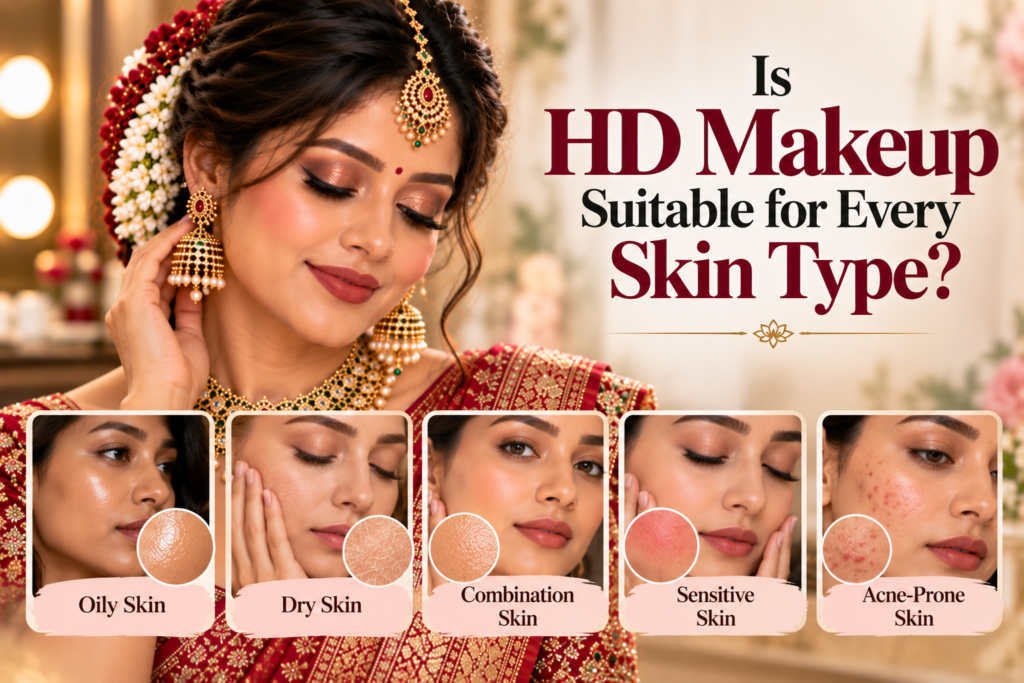
The short answer is that HD makeup can be adapted for most skin types, including oily, dry, combination and normal skin. However, the final result depends on your skin condition, product selection, skin preparation and the makeup artist’s technique.
Let’s understand how HD makeup works for different skin types and how you can choose the right approach for your wedding.
What Is HD Makeup?
HD stands for High Definition. HD makeup became popular as professional photography and high-resolution video became more common.
Modern cameras can capture fine details, so makeup artists often focus on creating a smooth, well-blended finish that looks polished both in person and on camera.
HD makeup generally emphasizes careful product selection, controlled layers and seamless blending. The goal is to enhance your features without making the makeup look unnecessarily thick.
For brides, this can be useful because wedding celebrations often involve close-up photographs, professional videos and different lighting conditions.
However, HD makeup is not a single product or a guaranteed result. The products and techniques used can vary between makeup artists.
Is HD Makeup Suitable for All Skin Types?
Yes, HD makeup can be customized for most skin types. The important thing is to prepare the skin appropriately and select products that suit its needs.
A makeup routine that works beautifully on oily skin may not be ideal for dry skin. Similarly, sensitive skin may require extra care when selecting products.
Here is how HD makeup can be approached for different skin types.
1. HD Makeup for Oily Skin
Oily skin produces more sebum, which can cause the face to look shiny during the day. For brides, this can be particularly challenging when the wedding involves warm weather, outdoor photography or several hours of ceremonies.
HD makeup can work well for oily skin when the artist uses suitable products and prepares the skin carefully.
What should brides with oily skin consider?
- Use a gentle cleanser before makeup.
- Avoid applying excessive skincare products immediately before the appointment.
- Choose makeup products suitable for oily skin.
- Use powder strategically where excess shine develops.
- Discuss oil control with your makeup artist.
- Keep suitable blotting papers available for touch-ups.
The goal is not to remove every trace of natural shine. Instead, it is to create a balanced finish that looks comfortable and polished.
Tip: Tell your makeup artist if your forehead, nose or chin tends to become oily quickly. This helps them plan the base makeup according to your needs.
2. HD Makeup for Dry Skin
Dry skin may sometimes appear flaky, rough or tight, especially when it lacks moisture.
If foundation is applied over poorly prepared dry skin, it may emphasize flaky areas or settle unevenly.
For this reason, skin preparation is particularly important when choosing HD makeup for dry skin.
How can dry skin be prepared?
- Maintain a consistent moisturizing routine.
- Use a gentle cleanser.
- Avoid excessive exfoliation before the wedding.
- Inform your makeup artist about dry or flaky areas.
- Discuss suitable hydrating makeup products.
- Avoid trying unfamiliar skincare products immediately before the event.
A properly prepared base can help makeup sit more evenly and feel comfortable throughout the day.
However, if your skin is irritated or severely flaky, consider seeking advice from a qualified skincare professional before the wedding rather than trying to cover the issue with additional makeup.
3. HD Makeup for Combination Skin
Combination skin typically has both oily and dry areas. For example, the forehead and nose may become oily while the cheeks feel dry.
This means a single preparation technique may not work equally well across the entire face.
A skilled makeup artist can adjust the preparation and application according to different areas of your skin.
What works for combination skin?
The artist may use different preparation methods for different areas, depending on your skin’s needs.
For example, the T-zone may need more attention to shine control, while the cheeks may benefit from additional hydration.
The amount of powder, foundation and other products can also be adjusted accordingly.
This customized approach can help create a balanced finish without making dry areas look excessively matte or oily areas look overly shiny.
4. HD Makeup for Normal Skin
Normal skin generally has a relatively balanced level of oil and moisture.
This can make makeup preparation more straightforward, although individual skin concerns still matter.
For normal skin, the makeup artist can focus on creating your preferred finish, whether that is natural, matte, satin or glowing.
Your foundation shade, coverage, eye makeup and lip colour should complement your features and bridal outfit.
Even if your skin is normally balanced, proper preparation and suitable products remain important.
5. HD Makeup for Sensitive Skin
Sensitive skin needs additional attention because certain cosmetic products may cause irritation or discomfort.
If you have experienced reactions to makeup, skincare products or particular ingredients, inform your makeup artist before the appointment.
Important precautions for sensitive skin
- Share details of known allergies.
- Avoid unfamiliar skincare products immediately before the wedding.
- Discuss the ingredients or products that have caused problems previously.
- Ask whether suitable alternative products are available.
- Consider a makeup trial well before the wedding.
- Seek medical advice if you have a persistent rash or active skin irritation.
A makeup trial can help you assess the appearance and comfort of a proposed look, but it cannot guarantee that an allergic reaction will not occur.
If you have a known cosmetic allergy, follow your healthcare professional’s advice and avoid the ingredient responsible.
6. HD Makeup for Acne-Prone Skin
Many brides worry about makeup because they have occasional breakouts, visible pores or acne marks.
HD makeup can be customized to provide different levels of coverage, depending on the bride’s preferences and skin condition.
However, more coverage does not always mean a better result.
Applying too much foundation or concealer may make the base appear heavy. Carefully placed and blended coverage can create a more balanced finish.
Tips for acne-prone skin
- Maintain your usual skincare routine.
- Avoid picking or squeezing active breakouts.
- Tell your makeup artist about current skin concerns.
- Ask about suitable products and hygienic application practices.
- Avoid trying strong acne treatments immediately before the wedding without professional guidance.
If you have painful, inflamed or persistent acne, a qualified dermatologist can help you plan appropriate treatment well before your wedding.
Does HD Makeup Last the Same on Every Skin Type?
No. Makeup longevity varies from person to person.
Even professionally applied HD makeup can be affected by several factors:
- Skin type
- Skin preparation
- Weather and humidity
- Products used
- Application technique
- Length of the event
- Sweating and physical activity
- Touch-ups
Oily skin may develop shine more quickly, while dry skin may need a different approach to maintain a comfortable finish.
This is why it is important to discuss your wedding schedule and skin type with your makeup artist.
For a long wedding ceremony, ask whether touch-ups are available and which products you should keep with you.
HD Makeup vs Traditional Makeup: Which Is Better for Your Skin?
Both HD makeup and traditional makeup can be suitable for different skin types.
The main difference is not that one technique works for all skin types while the other does not.
HD makeup generally focuses on a refined, camera-friendly finish. Traditional makeup can also create beautiful results, with a wide range of coverage levels and finishes.
The most important factors are the suitability of the products, proper skin preparation and the artist’s application technique.
Rather than choosing a technique simply because it is popular, ask your makeup artist which approach best suits your skin and the look you want.
How to Prepare Your Skin Before an HD Makeup Appointment
A little preparation can make your bridal makeup appointment much smoother.
Follow a Consistent Skincare Routine
Use products that already work well for your skin. Avoid introducing multiple new products close to the wedding.
Stay Hydrated
Drink enough water and maintain your normal healthy routine. Hydration supports general well-being, although it does not replace appropriate skincare.
Avoid Last-Minute Treatments
Unfamiliar facials, strong exfoliation and certain cosmetic treatments may irritate the skin. Plan treatments well in advance with a qualified professional.
Share Your Skin Concerns
Tell your makeup artist about oiliness, dryness, sensitivity, allergies or other concerns before the appointment.
Schedule a Trial
A trial gives you an opportunity to discuss the finish, coverage and overall appearance before the wedding day.
Questions to Ask Your HD Makeup Artist
Before booking your bridal makeup, consider asking:
- Which products do you recommend for my skin type?
- How will you prepare my skin before makeup?
- Can you customize the finish for oily or dry areas?
- What should I do if I have sensitive skin?
- Can we discuss my preferred coverage level?
- Is a makeup trial available?
- How should I prepare my skin before the appointment?
- Are touch-ups available during the wedding?
These questions can help you understand the process and set realistic expectations.
Common Mistakes to Avoid
Even when choosing HD makeup, a few common mistakes can affect the result.
Using unsuitable skincare products: Products that are too heavy or irritating may not suit your skin.
Skipping skin preparation: Applying makeup without considering the skin’s condition can affect the finish.
Choosing the wrong foundation shade: The foundation should complement your natural skin tone.
Applying excessive product: More makeup does not necessarily mean better coverage or a smoother appearance.
Ignoring allergies: Always communicate known sensitivities before the appointment.
Trying a new treatment just before the wedding: Last-minute experiments can create unnecessary skin concerns.
Choosing an artist based only on price: Look at the artist’s portfolio, experience, hygiene practices and package inclusions as well.
Final Thoughts
So, is HD makeup suitable for every skin type? It can be adapted for most skin types, but the right products, preparation and application technique make the difference.
Whether your skin is oily, dry, combination, normal or sensitive, your bridal makeup should be planned according to your individual needs.
A smooth, camera-friendly finish does not require every bride to use the same products or follow the same routine. What works best is a personalized approach that considers your skin, preferences, outfit and wedding schedule.
At Afiya Makeover, brides can explore professional bridal makeup services, including HD makeup, along with hairstyling and saree draping. Discussing your skin type and preferred bridal look in advance can help you prepare for a more comfortable and confident wedding-day experience.
The best HD makeup is not simply the makeup that looks beautiful on camera. It is the makeup that suits your skin, complements your features and helps you feel confident on your special day.